A strong family circle is comprised of people who convey appreciation for one another, stay connected, and are respectful of variations in interests, personal attributes, and capabilities." Over the last few weeks (going on months, and with no end in sight), families have had to think more carefully about—and also revise—their ways of living and learning together.
During this extended transition period, something has been percolating in many homes—a kind of positive rhythm and shared vibe. It’s a dynamic that parents and children can tap into as they continue to function day by day, side by side, and activity by activity. These are incredibly challenging times, but countless families are discovering that positivity can buoy spirits, temper grief, soothe souls, fortify togetherness, and create forward momentum borne of both necessity and hope. The COVID-19 pandemic is tumultuous and devasting, yet this tempest has also evolved into a “special time” for many parents and children. It's interesting that the Gifted Unlimited COVIDeo Support poster shows lots of lemons, as a way of illustrating (literally) the wisdom of that old adage, “When life gives you lemons, make lemonade.” It’s no coincidence then, that in my recent COVIDeo recording, I discuss several points that reflect positivity—the sweetness amid the bitterness, if you will. I reiterate some of those points very briefly here, using four headings and a question and answer format, and I convey additional perspectives as well. Family Bonding There seems to be SO much togetherness because families are confined. How can they become stronger while focused on just getting through each day? With everyone necessarily spending more time at home, parents are in close proximity to their children (considerably more so than usual), and therefore readily accessible to provide protection, safety, and guidance. All of these are extremely important at this time! There are many opportunities for families to become stronger together. For example:
Sharing What kinds of cooperative living strategies are families adopting during these extended times at home? Families are learning how to share spaces at home for work, play, technology, solitude, and exercise. In the process, they are reorganizing “stuff”—including furniture, personal belongings, and more. People are coming up with strategic, nuanced, or creative solutions to carve out nooks and crannies that they can use or share at different times. For instance, a cozy corner, a partitioned spot, a repurposed area of the kitchen or other rooms, or maybe even a newly created garden patch. Along the way, parents and kids are also learning about patience, how to adapt routines while still being respectful of everyone’s specific needs, and how to share responsibility for household chores. Flexible Pacing What is flexible pacing, why does it matter, and how does it apply to families who are spending more time at home now? Flexible pacing is a topic I discuss in my productivity and procrastination books. Flexible pacing is about having opportunities to do things (create, work, reflect, play) at a time and rate that best suits individual needs and energy levels, while also taking into consideration contextual issues. Flexibility has to do with respectful give and take. For example, during this difficult COVID-19 outbreak, many families are finding that when pressure to achieve is relaxed, and schedules are eased or revisited, there’s more time for sleeping in, laughter, story-telling, reading, innovative fort-building, puzzles, collaborative cooking, arts and crafts activities, gardening, games, and the pursuit of interests that may have been sidelined—until now. Home-based Learning What immediate advice can you give parents who have been thrust into teaching their children at home? Three essential keys are for parents and children to co-create education options, to devise individually tailored learning initiatives, and to set reasonable expectations. Here are some additional tips:
Last Words… In ABCs of Raising Smarter Kids, I use alliteration as both an organizing element and means of creative expression. For me, creativity is a source of solace and strength. For others, strength—and the powers of possibility and positivity—have different wellsprings. Or outlets. Families are sheltering at home, and parents are suitably positioned to discover what fuels their children’s passions, what fortifies their well-being, and how to help them navigate these challenging times. With that in mind, I conclude with some concise COVIDeo counsel. Consider:
“Amidst all the unprecedented unraveling of the fabric of our everyday lives we have to continue to seek the silver lining.” Joanne Foster, Ed.D. – May, 2020 (For additional articles relating to helping families cope during trying times, see the asterisked material on the Resources Pages of my website.)
0 Comments
by Joy Navan, M.A., Ph.D. Mysteries of Giftedness: A Lifespan Perspective  Perhaps it is a sense of the mystery of life, the mystery of the universe that surrounds us, and the mystery that is within us. It is within these vast unknowns that we try to establish our identities. We strive to carve out a place that is known, a place that we can manage, a place that is safe, a place that allows us to grow our unique Selves." It is advantageous to define the term elders with regard to the thoughts and perceptions offered in this blog post. I recall words written by former President Jimmy Carter, who published the book, The Virtues of Aging, at the age of seventy-four. He wrote, So then, when are we old? The correct answer is that each of us is old when we “think” we are -- when we accept an attitude of dormancy, dependence on others, a substantial limitation on our physical and mental activities, and restriction on the number of people with whom we interact." 2 While I agree that the term old may provoke thoughts of dependency, limitations, the loss of some mental acuity, and a narrowing of our participation in the social stream, the term elder, used in conjunction with gifted, has a much different connotation. Elders throughout most of human history and continuing in some current societies, are the wise ones, the spirit guides, and the teachers of the young; those whose existence sustains the present and guarantees the future of a people. To paraphrase the words of Jimmy Carter, it is incumbent upon our gifted elders to reject the forces that pressure them into dormancy. If they must depend on others at times, they can still strive to preserve their voice through surrender to the feelings of helplessness or powerlessness. When others talk about, rather than to older people in their presence, it is imperative that they interject their voice, diplomatically reminding others that they are cognizant of issues, that they have the ability to participate in decision making, and that they deserve to be addressed directly and respected. In 1991, the Columbus Group defined giftedness as follows: Giftedness is asynchronous development in which advanced cognitive abilities and heightened intensity combine to create inner experiences and awareness that are qualitatively different from the norm. This asynchrony increases with higher intellectual capacity. The uniqueness of the gifted renders them particularly vulnerable and requires modifications in parenting, teaching and counseling in order for them to develop optimally.3 Therefore, gifted elders defined are those older, highly intelligent individuals who demonstrate heightened sensitivities and are capable of continued creative productivity. As a final point, I propose that it is not only in parenting, teaching, and counseling that our understanding of the construct of giftedness is needed. Rather, as we observed throughout our exploration of giftedness in elderhood, the vulnerabilities of gifted individuals continue to threaten our wellbeing throughout the lifetime and require the support and intervention of sensitive and compassionate companions. The Mystery Annemarie Roeper, my friend and mentor, sat with me in her living room one evening. Her windows overlooked San Francisco Bay. She pointed to the distance, where we could see above the hubbub of cars and trains below. We gazed on the San Francisco Bay, the Golden Gate Bridge, and above these, a dark blue night sky. There was where the mystery lies for her–the beyond. Annemarie often expressed her belief that gifted children of the new millennium are much more in touch with the mystery than previous generations. I concur that many gifted individuals with whom I interacted over the years possess a sense of the mystery–of that which is beyond our conscious awareness. Their intuitive hypersensitivity to phenomena is a trait that allows them to make connections in ways that less perceptive individuals do not achieve. We will explore this strength further, but first we need to appreciate some of the more common characteristics of gifted elders. Characteristics of Gifted Elders One of the first traits we notice about a young gifted child is the voracious appetite for learning that the child displays. Often, parents and caregivers observe this rage to know when children become engrossed in learning everything possible about one particular interest or issue (e.g., dinosaurs, the solar system). Gifted adults and elders also possess the love of learning and immerse themselves in preferred subjects. In addition to intellectual characteristics of gifted children, we observe distinct social and emotional facets of their personalities. We see these facets as in our gifted elders. Below are traits of giftedness drawn from a variety of sources and my own experience.
Note: Gifted individuals may possess some or all of these characteristics. Perhaps one of the most eloquent descriptions of the Self of the gifted adult was penned by P. Susan Jackson. "Their extraordinary intellect, oceanic emotions, communicative capacities, social appetites, and reservoir of uncommon talent pulse with the need for right expression, right experience and right contexts, to be able to live authentically, and with verve." 4 Jackson continued that despite being so richly endowed, many gifted adults lack the self-awareness and explicit knowledge of Self necessary to actualize their potential and reach full development of their creative capacities. My work with gifted elders reveals similar findings with many not becoming aware of their giftedness until late adulthood or even elderhood. Transcendence For many elders, along with the characteristics and development of giftedness described thus far, the construct of giftedness may bring moments of transcendence – moments in which we may glimpse or perhaps touch that which lies beyond ordinary awareness when we come to see ourselves as integral parts of the mystery – of the interconnectedness of the universe. In such moments there is a sense of timelessness and an ethereal feeling of entering or being invited into to another reality. We may feel awe or trepidation as we confront the other worldly quality of the moment, especially the first time we encounter it. Afterward, often we feel as if we have received a gift to be honored and treasured. Gratitude bestows reverence, allowing us to encounter everyday epiphanies, those transcendent moments of awe that change forever how we experience life … and the world. Emotional Giftedness as the Heart of Giftedness Precisely because of emotional giftedness it is vital that we understand the Self of the individual. It is essential that we hear and acknowledge a gifted person’s emotions. For gifted elders, emotions are just as important and profound as one’s intellect. We cannot separate cognition from the emotional and we must honor the integration of both as vital facets of the Self. Nevertheless, we know from research that the strong emotional components of gifted children and gifted adults often lead educators and mental health providers who do not understand giftedness to misdiagnose them. Aging gifted individuals are at risk as well of being misdiagnosed with a disorder due to their intensity and heightened emotions. The avid reader who prefers solitude in order to engage in her favorite pastime is labelled antisocial. The elder who requests access to technology because he regularly corresponds with others throughout the world is told to be content with jigsaw puzzles. The introverted aging gifted person is often thrust into a residential living environment where residents are expected to socialize and to participate in group crafts and other activities. To paraphrase an aging friend when she told me that her family was urging her to move into such a facility, “I have authored several books, I continue to be professionally productive. What will I do in such a place? Make potholders?” Often even those aging gifted with dementia have an awareness of the mis-fit between who they are and where they are placed. A close friend who I have always thought of as highly articulate with a keen sense of humor is currently an Alzheimer’s resident in a horrendous nursing home. When I visit her, she brightens and smiles, filling my heart with her quips. However, behind the smile, in the depth of her eyes, is the awareness of her dismal reality. Hello Old Friend, You’re Back Again Our aging elders may never have recognized that many qualities they possess would be identified by the gifted community as characteristics of giftedness. Their keen intellectual ability, their hunger for learning, their heightened sensitivities, their intuitive problem solving, are but a few examples. They may have spent their lives believing that they were flawed because they were so different from the norm. They may be in residential long-term care facilities that offer little or no stimulation or opportunities for enrichment. Consequently, their differences become the more misunderstood and often mislabeled. Family members may treat the gifted elders as children, discounting their ability to think for themselves and participate in decisions regarding residential care, end-of-life decisions, and matters as simple as deciding what foods are healthy for them. Accordingly, the gifted individual feels disenfranchised in terms of her own abilities to self-regulate and is marginalized from family, friends, and society in general. I was recently chatting with a friend of mine who is also a former academic colleague. We were talking of the many new projects each of us recently began in our seventies. He is a runner and used a very appropriate metaphor, which might resonate with gifted individuals concerning their continued creative productivity and their feelings regarding a life as yet unfinished. He shared that he felt as if he were just approaching the starting line of life. My colleague’s words resonated strongly with me not only in terms of my personal need to be continually engaged and self-renewing. They also reverberate in terms of the mystery, of intuitive thinking, and of emotional giftedness. In so many ways, along with gifted elderhood comes the realization that the phenomena of giftedness are never left behind. Rather, they constantly re-present themselves as old friends, back again. References 1. Annemarie Roeper, The “I” of the Beholder: A Guided Journey to the Essence of a Child (Scottsdale, AZ: Great Potential Press, 2007).
2. Jimmy Carter, The Virtues of Aging (New York: Ballantine Publishing Group, 1998), 11. 3. Columbus Group, 1991, July. Unpublished transcript of the meeting of the Columbus Group. Columbus, OH. 4 P. Susan Jackson. Gifted Adults, standing, like curious children, before the great Mystery into which we were born…paraphrased from Einstein. Accessed May 31, 2017. www.linkedin.com/pulse/gifted-adults-standing-like-curious-children-before-great-jackson. February 4, 2017 5. Sarah Ban Breathnach, The Simple Abundance Journal of Gratitude (New York: Warner Books, 1996), 2.  The term “gifted unlimited” is intriguing! That two-word combination generates contemplation and inquiry. (Which I’ll wager is what Molly Isaacs-McLeod intended when she selected that particular word pairing for the name of her newly established gifted-related publishing enterprise.) What comes to mind when you hear “gifted unlimited?” Here’s what rattles around in my head: Is giftedness really unlimited? And perhaps more importantly: How can parents and teachers nurture gifted/high-level development? Parents, teachers, children, and teens can think about these questions—possibly in relation to their own lived experience, or the experience of others such as family members or close friends. In the meantime, here are some jumping off points… Is giftedness really unlimited? We can’t foretell who will accomplish great things, or become a world leader, or have innovative ideas that will change the face of our planet or solve society’s ills. And, although a good education and a supportive home are critically important, they alone do not enable us to determine a person’s potential.” Human development is complex and variable. People cannot predict the depth, extent, or impact of their capacities. The upper limits of anyone’s leaning potential cannot be predetermined or precisely charted. Potential—like the future—is unknown. Moreover, life is full of myriad factors and influences, and any and all of these can affect outcomes, including a person’s experiences, well-being, and levels of success. Abilities, including talents or “gifts,” have to be nurtured. The old maxim, “Use it or lose it!” has merit. Those who have acquired mastery in a domain (for example, music, architecture, athleticism, astrophysics, jurisprudence, health sciences, etc.), lose their edge if they do not continue to build upon their proficiencies. It’s important to exercise the body and the brain. Neural plasticity refers to the individual variability and dynamic flexibility of brain development—in other words, the brain is always changing—and thus under the right circumstances exceptional abilities can develop. I’ve written elsewhere that giftedness can be defined as “exceptionally advanced subject-specific ability at a particular point in time, such that a student’s learning needs cannot be well met without significant adaptations to the curriculum or without other learning experiences.” (Being Smart about Gifted Education, p. 28). That said, there are many definitions, and also conflicting understandings, about what giftedness is and isn’t. (Note the reference below to material by Scott Barry Kaufman.) Nevertheless, and regardless of whether a person has been formally identified as “gifted” or not, it makes good sense—at any age—to take steps forward in order to continue to advance, push limits, and go to the next level. And beyond… How can parents and teachers nurture gifted/high-level development? That’s a loaded question—and the answer is inextricably tied to the answer to this one: What can individuals do to support and become actively engaged in their own optimal development? Learning is a personally-charged, multifaceted, ongoing process, and there are boundless opportunities for it to occur from infancy ever-onward. As children grow, they are actively involved in creating their own intelligence, responding to and engaging in autonomous, shared, and multi-sensory learning experiences, and thereby becoming stronger, wiser, and more self-reliant through to adulthood.” So, what can people do to help to ensure that their abilities are maximized—starting from youth, and continuing throughout the life span? Here are 5 tips, applicable for gifted/high-ability learners, for the adults who support them, and for anyone who believes in striving toward limitless possibilities.
And Finally… Readers will find information and hundreds of strategies relating to intelligence-building and well-being throughout the pages of ABCs of Raising Smarter Kids. However, the material is not only applicable to young people—lots of take-aways will benefit learners of any age. By way of example, here are 5 short excerpts from just one page! (p. 160)
Indeed, “gifted unlimited” is a great name for a publishing company dedicated to stoking the fire of readers who seek to learn, but it is also a mighty and aspirational benchmark for anyone who intends to live life to the fullest! Additional Reading and Resources For additional information about how to support gifted/high-level development, see ABCs of Raising Smarter Kids by Joanne Foster, and also the multiple award-winning book Being Smart about Gifted Education by Dona Matthews and Joanne Foster. Readers can also find out more about optimal child development by checking out the authors’ book Beyond Intelligence: Secrets for Raising Happily Productive Kids. For tips on maximizing children’s efforts and industriousness, see Joanne Foster’s most recent book Bust Your BUTS: Tips for Teens Who Procrastinate (recipient of the Independent Book Publishers’ Association’s 2018 Silver Benjamin Franklin Award), and its predecessor, Not Now, Maybe Later: Helping Children Overcome Procrastination (both published by Great Potential Press). To learn more about these books, and to acquire accessibility to a wide range of articles and links (including the author’s column at The Creativity Post), go to www.joannefoster.ca. Information about professional development workshops and speaker sessions with Dr. Foster can also be found at this website. Be sure to check out the assortment of material published by Gifted Unlimited, LLC for excellent resources on gifted and high-level development. Two organizations that have plentiful resources and information on giftedness are the National Association for Gifted Children (NAGC) and Supporting the Emotional Needs of the Gifted (SENG). There are links, articles, conferences, webinars, and more. Scott Barry Kaufman writes about different types of giftedness in this article in Scientific American, and in much greater detail in his book “Ungifted: Intelligence Redefined.” In the new parenting book ABCs of Raising Smarter Kids, Dr. Joanne Foster reveals how to encourage and support children’s abilities. She provides expertise, practical strategies, and LOTS of relevant resources. Each letter of the alphabet has a thematic focus (such as Independence, Learning, Motivation, and Productivity). The ABC design differentiates this book from other parenting, gifted-related, and educational publications; the alliterative style makes the book unique; and the illustrations by Christine Thammavongsa are creative and thought-provoking. ABCs of Raising Smarter Kids is distinctive, engaging, and comprehensive. The early reviews are stellar. For more information about ABCs, Dr. Foster’s work, and her award- winning books and other publications, please visit her website at www.joannefoster.ca. During the middle school years, your child’s brain undergoes a growth spurt unlike any other since his first few months of life. The adolescent brain experiences a unique and powerful makeover, pruning away of all the unneeded bits of memory it has collected but not used since infancy. This house cleaning simultaneously makes room for the dynamic growth of fast, efficient memory circuits. These become the most important systems to direct thinking, reasoning, emotional self-management, decision making, problem solving, and creativity.
Adolescence is the start of a once-in-a-lifetime opportunity during which the brain is most responsive to turning information into learned memory at maximum speed. The enhanced rate at which new memory forms in response to input during these years results in its dynamic reorganization. Help your children make the most of these years of their most efficient learning potential by providing opportunities to increase their motivation. RELATED: Guiding Our Children Through School Transitions: Middle School The keys to unlocking their unique adolescent brainpowers lie in motivation and opportunity. Middle school often presents new and more challenging subjects and classes. At the same time, those classes can seem irrelevant, boring, or frustrating, especially when compared to friends, social media, and technology which can seem far more interesting and readily available. This where you, the parents, come in. You have the power to engage their interest in the topics and subjects they study in school and promote their perseverance through boredom and frustration. Before the brain learns powerfully, it needs to care In their early school years children are engaged in learning because the information is personally relevant. School is about the shapes and colors in their world, how to count real things, reading books they choose, the story of their own history, and the secrets held in a seed, a cell, or a cocoon. Although they might enter middle school with that natural curiosity and desire to learn and explore, the quantity of things now required to memorize and understand can be overwhelming and disconnect them from that love of learning. But parents have the opportunity to enrich their middle schooler’s education and raise their potential. You can make the difference and keep their brains caring, and therefore learning, if you use their own interests and skills, community resources, and your own experiences and associations to connect with the things they are studying at school. Relate learning to their lives and the world around them from community to global Get involved in their classes by either requesting upcoming topics from your child’s teachers, following the sequence of their textbooks, checking class assignment webpages, or asking your middle schooler about the current topics in her classes. Try to help her connect with, understand, care about, and ultimately retain what she learns. The goal is to link school learning with your child’s interests, talents, passions, and experiences in the real world. The brain responds by increasing attentive focus to information taught at school and connecting to learning with more understanding and memory. Here’s why:
Activating interest and boosting memory circuits
By exposing your children to a variety of people and experiences, you will stimulate their curiosity to go beyond the classroom. They will see the value of academic effort and the opportunities available connecting through the doors of learning. Have friends over who use the knowledge your child is learning in their everyday lives, careers, or hobbies. For example consider their use of math skills for robotics, foreign language skills for travel to other countries or creative artistic talents. Invite these friends to join you and your middle schooler on museum trips or technology expos. Visit them at their places of work.
Opportunities to use and enjoy the things taught at school - from home projects to on-the-go math When you know the topic your middle schooler is studying, ask yourself, “What is something she loves that might connect to the knowledge or skills she is acquiring?” It might be a subtle connection, but if you find a way to link to something she likes physically, musically, socially, or recreationally you are hooking into her brain’s own most powerful motivational “reward” system.
What you’ll ignite It is so critical for children in middle school to retain or reboot their sense of wonder and experience learning as something they want for themselves. When you ignite their interests to align with what they are learning and provide opportunities to make that learning relevant, you achieve that end. You will help them develop positive engagement with school and grow to teens and then adults who thrive from their natural enthusiasm, curiosity, wealth of knowledge, and confidence. You will spur them to investigate, interact with, and improve the world around them. And you’ll be helping them not just survive, but thrive during the challenges of middle school. These 12 questions can help parents think about how they’re being supportive, how to proceed...
Most importantly, parents can question their own assumptions, inferences, and perceptions. They can also explore how to strengthen their own support networks, how to look after themselves better, and how to continue strengthening the parent-child relationship. For more information, see the letter Q in ABCs of Raising Smarter Kids: Hundreds of Ways to Inspire Your Child. And, visit www.joannefoster.co 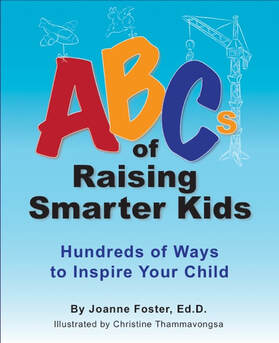 ABCs of Raising Smarter Kids
Written by Joanne Foster, Ed.D. Illustrated by Christine Thammavongsa Published by Gifted Unlimited, LLC. - Released July, 2019
Through recent years, as my research, practice, and experience with gifted individuals embraces all ages across the lifespan, a question emerged. In what ways does giftedness manifest itself across the lifetime? In response, there is the need to define what term giftedness. In 1991, the Columbus Group defined giftedness as follows. Giftedness is asynchronous development in which advanced cognitive abilities and heightened intensity combine to create inner experiences and awareness that are qualitatively different from the norm. This asynchrony increases with higher intellectual capacity. The uniqueness of the gifted renders them particularly vulnerable and requires modifications in parenting, teaching and counseling in order for them to develop optimally.1 When I entered the field of gifted education as a resource teacher for gifted students in the early 1980’s, many educators, parents, and researchers held the common belief that individuals grow out of giftedness after the elementary years. In the middle school and high school years most schools melded previously identified students with other high functioning students in honors or Advanced Placement programs. I considered the administrators in our school district as visionary when they created my position as a resource teacher for grades seven through twelve, intending that the gifted in those grades would receive qualitatively different learning experiences beyond their elementary years. More recently, the gifted community expanded the literature in the field to include gifted adults, and yes, even gifted elders. For giftedness is a lifelong phenomenon. Often, we come to that awareness as described in the words below. We did not hear the word gifted as a child. We thought we were odd. Even as we age, it is difficult to say aloud, “I am a gifted adult.” We realize the differences in our reasoning, but mostly in our feelings. When loved ones hurt, we feel physical pain. A breathtaking sunset brings tears to our eyes. We lie awake at night, wishing we could set things right in the world. We labor to internalize the wisdom of Candide to tend our own garden; and, when we do so, it is with an intensity that could ignite the universe.2 I wrote the words above as part of a 100 Words of Wisdom series shortly before my 70th year. Six years later, the words remain an affirmation of the reality and the intensity of adult giftedness. Additionally, they prompted me to embark on an inquiry project into the world of the gifted elder. I have been fortunate to interview or to receive narratives from over forty gifted individuals, ranging from the mid-fifties to their early nineties. It remains for a future blog post to report some of my inquiry findings. Suffice it presently to share a few understandings.
1 The Columbus Group, 1991 2 Joy Navan (2013). “100 Words of Wisdom: Joy Navan,” accessed December 10, 2016. sengifted.org/100-words-of-wisdom-joy-navan/ by Nicole A. Tetreault, Ph.D.  High emotional capacity is a blessing and a curse. Without high emotional intelligence individuals like, St. Teresa of Calcutta would have not impacted our world so profoundly. We need these individuals to open our eyes to be more empathetic, caring, and develop creative solutions to better society. Even with all of St. Teresa of Calcutta’s massive progress, she suffered silently with her faith and the venerability of the human condition. Gifted individuals with a high emotional intelligence are told they are too sensitive that they just need to get over it, and that they take too much to heart. In reality, highly gifted emotional individuals can’t get over it or stop being too sensitive in a quick manner, their brain is wired differently. Gifted individuals have expanded brain regions and networks for emotional processing, insula and cingulate cortex, allowing them to feel all dimensions of emotions (fear, anger, sadness, disgust, surprise, anticipation, joy, and trust, identified by Robert Plutchik) and ponder the deep emotional complexities. Importantly, sensory information (touch, taste, smell, tactile, hearing, and seeing) along with memories are coded and decoded in the expanded regions for emotional processing thus a heighten sensory response can elevate emotional content of an experience or memory. We know that gifted individuals experience the world with an elevated intensity and their brain wiring and neuroanatomy are the core of their expanded ability for processing information. It is paramount we embrace the range of human neurodiversity. Gifted individuals with a high verbal IQ self-reported they had increased worry and rumination compared to age matched individuals. At a glance, a gifted individual with an expanded vocabulary evaluates words, language, and meaning in a more complex manner which, can amplify their thought process, emotions, and experiences. A gifted individual may have all 464 meanings of the word run at their fingertips, may ruminate on the beauty of language, and create poetry like Maya Angelou. Many emotionally gifted individuals have a profound commitment to make the world better which, may exacerbate their emotions and intensity. Social justice is a core value that weighs on an emotionally gifted individual and when the balances are uneven this may be very challenging for the individual as well as for others since the perceived evaluation is imbedded in their anatomy and drive. For example, a gifted child on the playground that experiences a classmate cheating in a game of dodge ball, may cause a rage of furry if the cheater is not disciplined. The injustice on the playground may carry with them throughout the day and may have difficulty letting go, since the gifted individual is prone to worry and rumination. An increase in anxiety and depression was self-reported by gifted individuals compared to the national average. It is hypothesized that their increased emotional ability may be a precursor for increased accounts of anxiety and depression. Gifted expansive empathy is seeing, feeling, and embodying things more deeply and is at the center of the gifted experience. In a recent study individuals that experienced social exclusion activated anterior cingulate cortex and anterior insula, indicating that physical and emotional pain illicit similar neural networks. Is too much empathy a bad thing? In a recent study, researchers found that too much empathy can actually be disadvantageous since, it can hinder processing other information and be linked to negative emotions. The flip side, individuals must experience the broad range of emotions and in our society, we over identify that individuals need to be joyous and happy all the time. In reality emotions, thoughts and, bodily sensations fluctuate moment to moment. Importantly, the moment, feeling, experience, and situation need to be evaluated for what it actually is rather than what it is expected to be. A gifted individual can find peace in the truth of the moment rather than what is expected. Tuning into the moment mindfully can aide in their understanding and self-healing. Specifically, while individuals practiced a mindfulness meditation while watching other’s pain, it allowed for an adaptive mechanism for suffering. Here are ways to help support an emotionally gifted individual and strategies to navigate the complex world. Listen to their needs and feelings. A profoundly gifted individual needs to be heard and the act of listening and acknowledging their stories, feelings, and bodily needs is the first step in understanding the depths of their emotions. Understand that language for a gifted child has a million meanings. Gifted individuals with an elevated emotional processing have profound verbal ability. Choose your words carefully and make sure when you use a word, you both understand the same meaning. Patience when they respond and let them ponder the why. Allowing the individual to respond within their own time frame and being patience is crucial. No two brains are alike and processing speed of emotional information is unique to every individual. De-identify as only their problem. Get them engaged with like-minded individuals to help them understand that they are not alone. Being part of a tribe and group that holds similar beliefs and values, guides them to understand they are part of a collective, bigger than themselves. Cultivate and empower them that they can make a difference. Give them hope that they can make a difference. It is through our difficulties and suffering that great change happens. Start small and grow. Making small change is better than no change at all. My son, Spence, is increasingly worried about global warming and the state of our planet and he decided to reduce his carbon footprint by becoming a vegetarian. Help them establish things that are out of their control. Guiding them to understand that they can only be responsible for themselves and that they can make change by their behavior and actions. Help them recognize that each day is different, and they can realize some are better than others. The impermanence of life. Reality check. Sometimes life sucks and it really sucks. Like the fact that the Arctic is melting and as a society we need to come together to aide in the problems of global warming. Have them practice loving kindness meditation for self-compassion. Cultivation of self-compassion is good for healing and wellness. Remember the words of St. Teresa of Calcutta, “Do not wait for leaders, do it alone, person to person.” References Ashar YK, Andrews-Hanna JR, Dimidjian S, Wager TD. Empathic Care and Distress: Predictive Brain Markers and Dissociable Brain Systems. Neuron. 2017 Jun 21;94(6):1263-1273.e4. doi: 10.1016/j.neuron.2017.05.014. Epub 2017 Jun 8. PubMed PMID: 28602689. Karpinski RI , Kolb AM, Tetreault NA, Borowsk T. Forthcoming 2017. High Intelligence: A Risk Factor for Psychological and Physiological Overexcitabilities.” (Manuscript under review). Laneri D, Krach S, Paulus FM, Kanske P, Schuster V, Sommer J, Müller-Pinzler L. Mindfulness meditation regulates anterior insula activity during empathy for social pain. Hum Brain Mapp. 2017 Aug;38(8):4034-4046. doi: 10.1002/hbm.23646. Epub 2017 May 15. PubMed PMID: 28504364. Ohtani T, Nestor PG, Bouix S, Newell D, Melonakos ED, McCarley RW, Shenton ME, Kubicki M. 2017. Exploring the neural substrates of attentional control and human intelligence: Diffusion tensor imaging of prefrontal white matter tractography in healthy cognition. Neuroscience. 2017 Jan 26(341)52-60. Penney, A. M., Miedema, V. C., & Mazmanian, D. (2015). Intelligence and emotional disorders: Is the worrying and ruminating mind a more intelligent mind? Personality and Individual Differences, 74, 90-93. doi: 10.1016/j.paid.2014.10.005 Schmälzle R, Brook O'Donnell M, Garcia JO, Cascio CN, Bayer J, Bassett DS, Vettel JM, Falk EB. Brain connectivity dynamics during social interaction reflect social network structure. Proc Natl Acad Sci U S A. 2017 May 16;114(20):5153-5158. doi: 10.1073/pnas.1616130114. Epub 2017 May 2. PubMed PMID: 28465434; PubMed Central PMCID: PMC5441802. James T. Webb, Ph.D., ABPP-Cl, Edward R. Amend, Psy.D., Paul Beljan, Psy.D., ABPdN, Nadia E. Webb, Psy.D., Marianne Kuzujanakis M.D., M.P.H., F. Richard Olenchak, Ph.D., Jean Goerss, M.D. 2016. Misdiagnosis and Dual Diagnoses of Gifted Children and Adults ADHD, Bipolar, OCD, Asperger’s, Depression, and Other Disorders (2nd edition). Tucson (AZ): Great Potential Press. Plutchik, Robert (1980), Emotion: Theory, research, and experience: Vol. 1. Theories of emotion, 1, New York: Academic 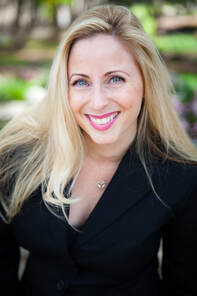 Dr. Nicole A. Tetreault is a neuroscientist, researcher, author, meditation teacher, and speaker who specializes in neurodevelopment and neurodegenerative disorders. She received her Ph.D. from California Institute of Technology (Caltech) in Neuroscience. Dr. Tetreault has authored many peer-reviewed scientific papers on the topics of gifted experience, neuroinflammation in autism, brain evolution, neuroanatomy, brain development, behavior, and cell function. Most recently, she has focused her efforts on studying the neurodiverse experience, encompasses the brain and body connection, by investigating the latest neuroscience, psychology, and physiology research. She is completing her first book, Feeling Color: A Field Guide to Diverse Minds, which explores groundbreaking research of the human mind and is a collection of stories of our most creative and neurodiverse minds.
 My name is Molly Isaacs-McLeod, JD, LL.M., president of Gifted Unlimited, LLC. Welcome! I am glad you are here! Gifted Unlimited has been in the making for some time now. We are delighted to be taking our initial steps as a new provider of quality, research-based content that speaks to the gifted community and, in some cases, well beyond. In addition to publishing, we look forward to providing opportunities for gifted individuals to build community- virtually and in real life- via local and regional events, podcasts, and social media. The sharing of resources and the normalizing of the gifted experience is crucial to our well-being as individuals and as a group. We are thrilled and honored to announce the summer debut of our first book, ABCs of Raising Smarter Kids, alliteratively written by multiple award-winning author, Joanne Foster, Ed.D., and intriguingly illustrated by Christine Thammavongsa. Please click on the link above to read more about ABCs, and to sign up to be notified when preorders may be placed. We hope you will visit often. We are accepting submission of manuscripts for books, as well as material for our blog page. Stay tuned for exciting announcements to come- new books, community building events, speaking schedules, etc. Welcome to Gifted Unlimited's Blog Page! We look forward to providing you with the opportunity to explore and learn more about the gifted experience. We encourage you to comment on the posts, and exchange ideas with your fellow readers! Post topics will include:
 |
Blog
Check here for interesting articles about giftedness, intensity, parenting, twice-exceptionality (2E), neuroscience, social emotional needs, and more! We look forward to your feedback. If you would like to write an article...
Archives |
 RSS Feed